



On 21 November 2025, the European Commission’s Directorate-General for Environment (DG Environment) opened public consultations on proposed amendments to Annex I of the EU Persistent Organic Pollutants (POP) Regulation (EU) 2019/1021.
The proposal aims to add three substances to the Annex I list of chemicals prohibited from manufacture, placing on the market, and use (with limited exemptions):
-
Medium-Chain Chlorinated Paraffins (MCCPs, C14–17)
-
Chlorpyrifos
-
Long-Chain Perfluorocarboxylic Acids (LC-PFCAs), their salts and related compounds
The consultation period will last four weeks, ending on 19 December 2025. The amendment is expected to be formally adopted in Q2 2026.
1. Purpose of the Proposed Amendment
This amendment aims to further restrict chemicals identified as persistent, bioaccumulative, and harmful to human health or the environment. If adopted, the inclusion of MCCPs, chlorpyrifos, and LC-PFCAs in Annex I would mean these substances are effectively banned from all production and market activities within the EU.
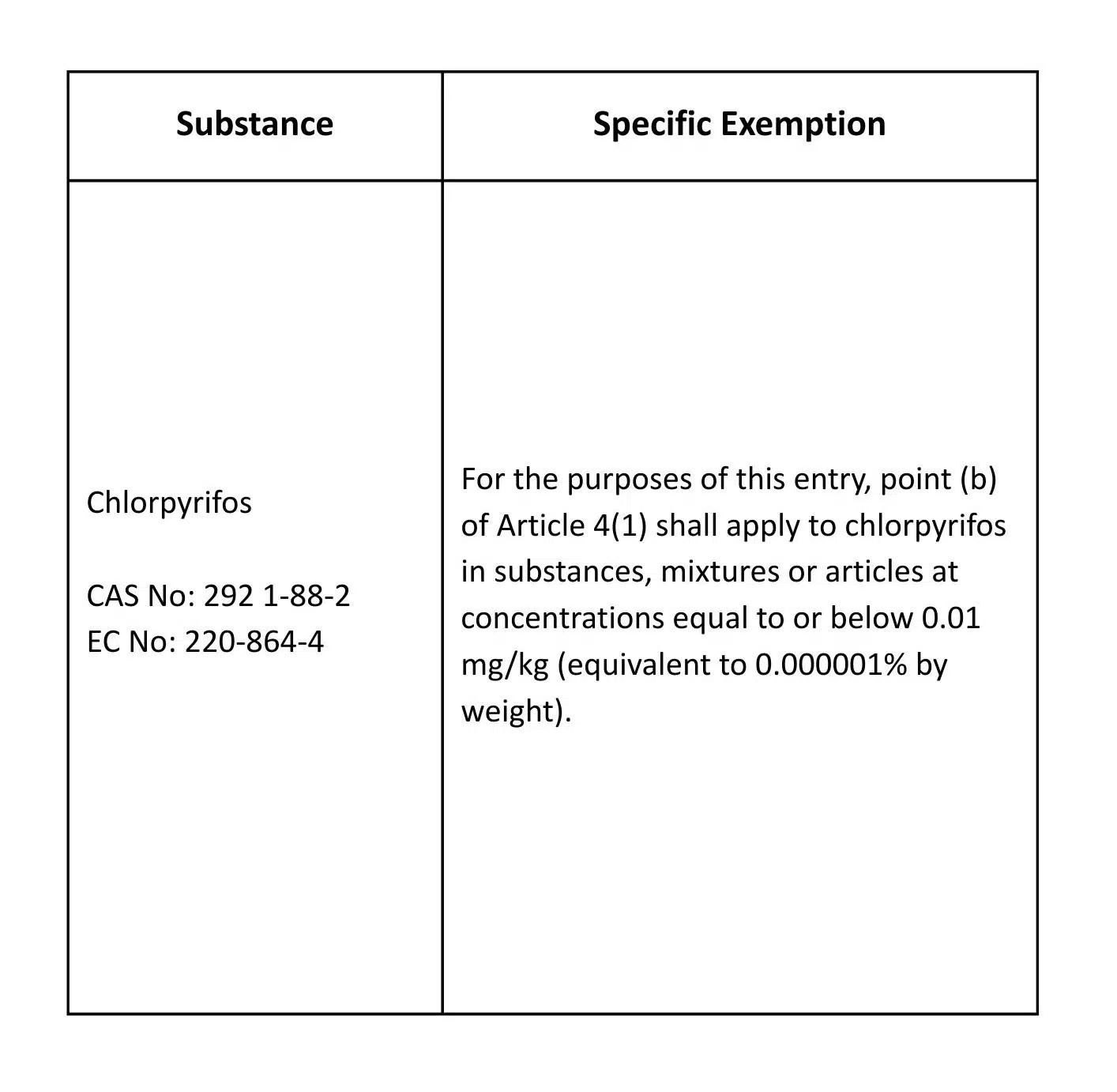
2. Overview of Chlorpyrifos – One of the Substances Proposed for Listing
Chlorpyrifos is an organophosphate insecticide widely used in agricultural pest control and certain non-agricultural applications. By 2008, chlorpyrifos had been authorized for use in over 88 countries worldwide.
2.1. Regulatory Status in Major Markets
-
In the European Union, the use of chlorpyrifos in biocidal applications began to be p
-
hased out from 2008, following Commission Decision 2007/565/EC.
-
The U.S. Environmental Protection Agency (EPA) initiated the phase-out of most non-agricultural uses as early as 2000.
-
Some countries still allow chlorpyrifos in specific contexts, such as termite control inside buildings.
-
In India, relevant authorities continue to recommend its use for termite prevention.
2.2. Uses in Residential and Industrial Applications
Chlorpyrifos is commonly found in wood-preservation treatments, including:
-
Processed wood products
-
Fence posts
-
Utility poles
-
Railway sleepers
-
Wooden containers and cargo boxes

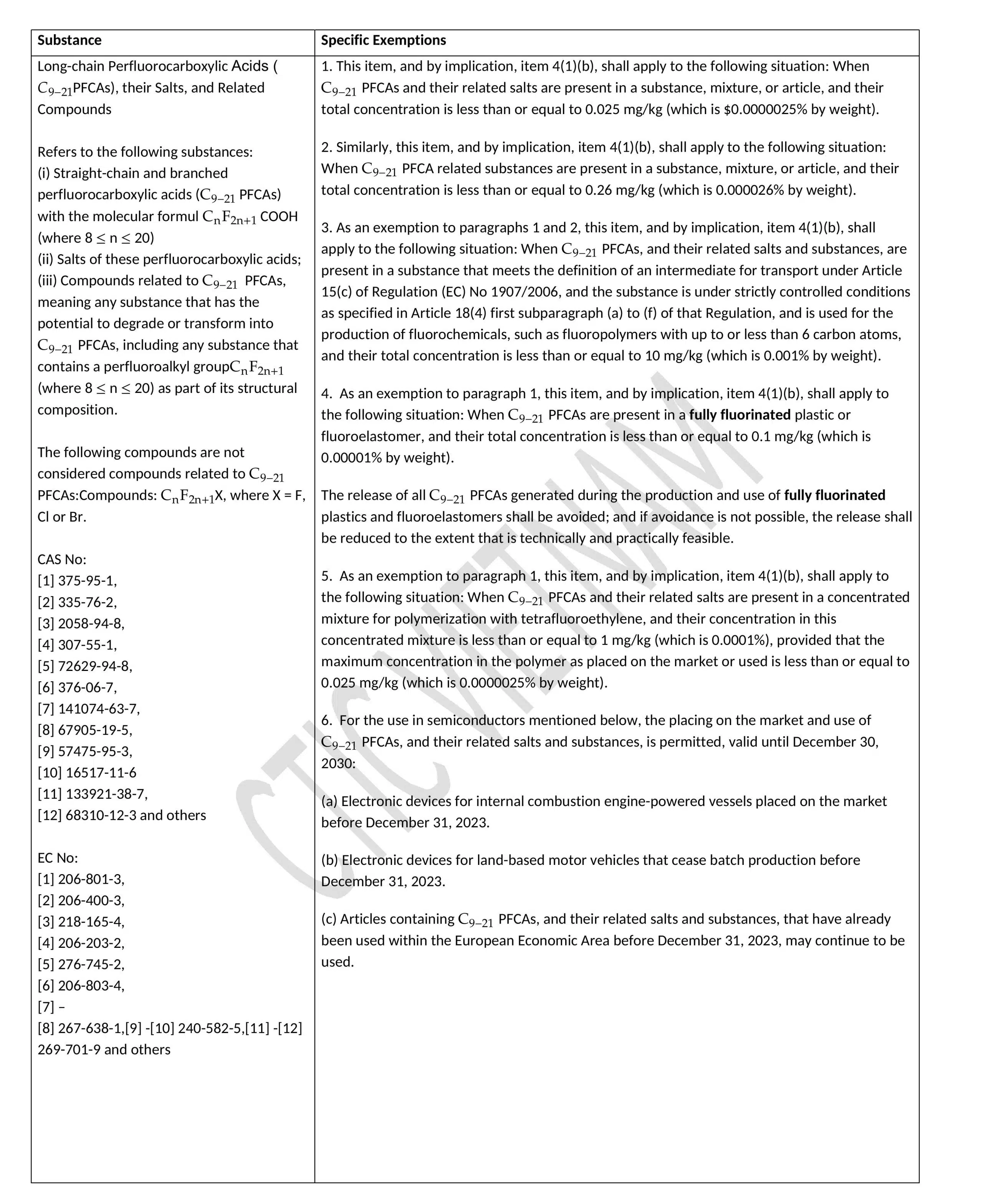
3. What This Means for Businesses
If the proposed amendment is adopted:
-
Any product containing MCCPs, LC-PFCAs, or chlorpyrifos may no longer be manufactured, imported, or placed on the EU market.
-
Industries likely to be affected include plastics, rubber, coatings, wood treatment, construction materials, and consumer goods.
-
Businesses should monitor the amendment closely and begin planning for substance substitution and compliance risk assessments.
Contact CTIC now for EU chemical compliance consulting and testing services
